Most homes and buildings wait too long to replace an aging air conditioner. Not out of neglect, usually out of habit and a few persistent myths. After years on job sites and in equipment rooms, certain ideas come up again and again, even from diligent owners who keep up with AC maintenance and budget sensibly. The stakes are high. A replacement touches comfort, humidity, power bills, and the longevity of your ducts and electrical. When the decision is built on bad assumptions, you can end up with a louder system, poor dehumidification, and higher operating costs than you had with the old unit.
Here are the myths that cause the most trouble, and what actually matters when you weigh HVAC replacement.
Myth 1: “If it still runs, it doesn’t need replacing”
A compressor that starts every time is only one piece of the picture. We look at capacity, efficiency under real loads, refrigerant type, and repair history. Older units, especially pre-2010 equipment, often use R‑22 or first-generation R‑410A designs that draw more power to deliver the same cooling. Even if the nameplate SEER says 14, it may be delivering far less after coil fouling, fan wear, and duct leakage raise static pressure.
A practical way to frame it is to compare utility spend. If a homeowner ran a 3‑ton, 10‑SEER system for years, summer bills might jump 20 to 40 percent as performance slides. Replacing with a modern SEER2 15 to 18 system usually trims those bills meaningfully. On light commercial projects we see 15 to 25 percent HVAC energy reduction just moving to right-sized equipment with ECM blowers and properly balanced airflow. Over a 10 to 15 year lifespan, those savings can eclipse the price tag of air conditioning replacement, even before repairs are considered.
Quietly failing parts also skew the picture. A weak capacitor or a pitted contactor lets a unit “run” while hammering the compressor on start-up. That shows up later as an expensive AC repair. Running is not the same as running well.
Myth 2: “Bigger AC means better comfort”
Oversizing is one of the fastest ways to ruin comfort and shorten equipment life. Cooling is not just about knocking down temperature, it is about removing moisture. An oversized system drops the thermostat quickly, then shuts off before it can dehumidify. The result is cool but clammy rooms, musty odors, and mold risk around supply diffusers. Short cycles also mean more starts per hour, which is harder on compressors and blower motors.
Sizing should follow a load calculation. Good HVAC contractors rely on Manual J for residential and a proper load/ventilation analysis for commercial HVAC. Square footage is a starting point, not a decision. Window orientation, insulation, duct leakage, occupancy, and internal gains all alter the load. We have replaced plenty of 4‑ton units with 3‑ton heat pumps after improvements to air sealing and ducts. Those spaces felt better and cost less to run, especially in shoulder seasons when a right-sized system can cruise rather than slam on and off.
Myth 3: “Just replace the outdoor unit”
Mismatched systems are a common source of headaches. The outdoor condenser, indoor coil, and blower are engineered as a set. Mix a new condenser with an old coil and you risk poor refrigerant metering, wrong superheat and subcooling, and efficiency losses that erase the point of the upgrade. In some cases the coil is not rated for newer refrigerants or pressures and will leak prematurely. Today’s efficiency testing, including SEER2 and EER2, certifies matched combinations. If the indoor half is a decade older, you cannot count on factory-rated performance.
On the service side, a partial changeout can complicate AC repair. Parts lists, control boards, and expansion devices might not match. Troubleshooting becomes guesswork, especially when airflow numbers do not align with what the new condenser expects. When we do air conditioning installation work, we insist on checking the air handler’s blower capacity and the coil match. If the indoor unit is close to its own end of life, the partial approach is a false savings.
Myth 4: “Replacement always costs more than repairing again”
There is a line where repeated fixes cost more than an upgrade. In the field we use a simple rule of thumb to guide owners: multiply the age of the equipment by the quoted repair. If that product is greater than the price of a new system, a replacement usually makes more sense. A 12‑year‑old unit facing a 900 dollar compressor contactor and fan motor overhaul is 10,800 in “age dollars.” If a new, properly sized system would cost in that same zone and cut energy use by 20 percent, the case for replacement gets strong.
Even with smaller repairs, patterns matter. Two refrigerant leaks in as many summers suggest underlying corrosion or rubbing lines. A blower wheel that keeps loading up with dirt often points to duct leakage that will keep hurting coils and motors. Spending on symptomatic fixes without addressing root causes wastes both money and time.
What Southern HVAC LLC Looks For During Replacement Assessments
When a team from Southern HVAC LLC evaluates an older system, they do more than note the model number and tell you how many tons it is. They measure static pressure to see how the duct system behaves under load. They check temperature split, not just at a single register but across the supply and return plenums, then verify airflow. If the numbers fight each other, they do not just swap boxes. They look at return drop sizes, filter racks, and boot restrictions, because that is where real gains are found.
On several projects, an owner asked for the highest SEER possible to cut bills. After a walkthrough and a Manual J, the crew from Southern HVAC LLC recommended a modestly efficient, variable-speed heat pump paired with a small round of duct improvements and a media filter cabinet. The result outperformed a higher-SEER box installed on a leaky, starved return. It is not about selling the biggest headline rating, it is about making the system work as a whole.
Myth 5: “Ductwork is fine if I feel air at the vents”
If your ducts leak 20 percent of their air into the attic, you can feel strong airflow at the nearest supply and still starve back bedrooms. Static pressure often runs high in older homes with restrictive returns and undersized filter racks. High static burns out ECM motors early and lifts noise levels. Leaky supply trunks pull in attic dust on the return side, which fouls evaporator fins and drives coil temperatures down toward freezing. That produces the iced-coil calls that look like a refrigerant problem from the thermostat, when the real culprit is airflow.
Ducts affect comfort, energy use, and equipment life. During HVAC replacement, a pressure test and a quick balancing pass often deliver more comfort than another half-ton of capacity ever would. In commercial HVAC work, leaky rooftop duct runs can push fan energy through the roof and upset building pressure, which draws in humid outside air through door gaps and elevator shafts.
Myth 6: “Heat pumps cannot handle cold or mixed climates”
Modern heat pumps carry variable-speed compressors and intelligent defrost controls. Down to the high teens Fahrenheit, a well-sized heat pump will handle the full load in many regions. Below that, models with enhanced vapor injection or cold-climate ratings stay productive. Where winters dip lower, a hybrid setup pairs the heat pump with a gas furnace or electric strip backup. The balance point can be tuned based on actual utility costs. We have seen heating maintenance histories that show 60 to 70 percent of the winter load handled by the heat pump with the rest picked up by auxiliary heat on the coldest mornings.
This impacts replacement decisions. If an older AC and an older furnace both need work, a heating replacement that moves to a heat pump can consolidate equipment, reduce combustion safety concerns, and improve humidity control in spring and fall. Heating installation is not just about peak BTUs. It is about how the system behaves in mild weather, where a heat pump shines.
Southern HVAC LLC on Quiet Comfort vs. Raw Capacity
Noise drives more replacements than people admit. A new system can be quiet, but only if airflow is matched to the coil and the blower is not battling a constricted return. Southern HVAC LLC pays attention to return grille sizing, filter media pressure drop, and supply branch velocities. Drop velocities a bit and you often cut perceived noise in half. Modulating equipment helps, too. By staging, the unit runs longer at lower speeds, which smooths temperature, wrings out more humidity, and lowers sound.
One memorable case involved a nursery directly under a bedroom supply that howled at every start. The homeowner thought a bigger system would cool faster and “get it over with.” Instead, the team rebalanced the branch, upsized the return path, and installed a variable-speed air handler with a soft ramp profile. Same capacity, radically better comfort.
Myth 7: “Commercial HVAC is just bigger residential gear”
Commercial HVAC shares parts with residential systems, but the design priorities differ. Occupancy varies by hour, ventilation codes demand precise outside air, and controls matter as much as the condenser. A package unit on a retail strip might need demand-controlled ventilation tied to CO2 levels. A small office may benefit from zone dampers to prevent the south-facing conference room from roasting while the core stays cool.
This shapes replacement timing. Swapping a rooftop unit at 5 pm on a weekday can mean two days of downtime if a crane cannot be scheduled or the curb adapter does not match. Plan replacement during off-hours and check power, curb size, economizer configuration, and BAS integration ahead of time. For commercial HVAC, coordination saves more than any last-minute discount ever could.
Commercial HVAC Myths Seen by Southern HVAC LLC
In commercial sites, Southern HVAC LLC often finds two myths. First, that an oversized unit is safer because “meetings run hot.” In reality, under-ventilated, poorly zoned spaces feel hot even when the unit has spare capacity. Second, that filters are a small line item to trim. Cheap, restrictive filters swapped infrequently drive up fan energy and reduce coil life. After several filter-related blower failures in a multi-tenant building, the property manager switched to a media cabinet with lower pressure drop and a schedule. Fan amperage fell, and complaints did too.
The team also sees control settings that sabotage comfort. Economizers stuck open drag in humid outside air all summer. Poorly tuned supply air reset strategies cause temperature swings. During HVAC replacement, verifying economizer function and control sequences is as important as the new compressor’s tonnage.
Myth 8: “Off-season replacement is pointless”
Waiting for July to think about air conditioning replacement limits your options. Manufacturers and distributors set inventory and lead times months ahead. In spring or fall, installers have more schedule flexibility, duct repairs are less rushed, and you are not trying to diagnose airflow problems with sweat dripping from your forehead. Energy usage studies are cleaner in shoulder seasons, too, because you can run test cycles without overwhelming loads.

For homeowners and facility managers, off-season work simplifies logistics. It is easier to coordinate electrical upgrades, permitting, and any required structural work for rooftop units. In homes, plaster or drywall repair around new return grilles is less disruptive when there is not a heat wave bearing down.
Myth 9: “Maintenance does not change lifespan much”
AC maintenance is not just a box-ticking exercise. Clean coils, correct refrigerant charge, and proper airflow keep head pressure reasonable and reduce compressor heat. A dirty outdoor coil can raise condensing temperature by 20 to 40 degrees Fahrenheit on a hot day, which hammers amp draw and slashes efficiency. Clogged condensate traps cause pan overflows and moldy odors that erode trust in a system, even if cooling output is fine. Yearly checks catch these issues before they produce a no-cool call on a weekend.
On heating service, the same logic applies. Inspecting heat exchangers, verifying combustion air, and testing safeties reduces nuisance trips and protects occupants. For heat pumps, keeping the outdoor coil clear of leaves before winter cuts defrost cycles. A unit that runs within design pressures and temperatures lasts longer and stays quieter. That extends the window before heating repair or AC repair becomes unavoidable.
Myth 10: “Thermostats and controls are an afterthought”
A replacement is a chance to fix control issues. Old mercury stats and basic digital thermostats treat cooling as an on-off switch. Modern controls stage capacity and blower speed to increase latent removal. Humidity setpoints help avoid overcooling. In commercial spaces, scheduling that matches occupancy prevents early morning “icebox” starts and late afternoon bakeouts. Poor control of reheats and terminal boxes can burn energy while creating drafts that keep people in sweaters in July.
We often see owners install premium equipment without changing a control strategy that was written for a single-stage unit. The result is short cycles and lost efficiency. The fix is inexpensive compared to the hardware itself.
A quick check: signs that replacement should be on the table
- The system is 12 to 15 years old and has needed two or more significant repairs in the last 24 months. Energy bills have crept up year over year despite steady usage and clean filters. Humidity feels higher than it used to at the same thermostat setting, or you notice musty smells. Hot and cold spots persist even after duct sealing or balancing attempts. The equipment uses a refrigerant that is being phased down, and parts are getting harder to source.
This list does not replace a site visit. It helps you start the conversation with an HVAC contractor from a practical place.
How the details of installation outweigh nameplate ratings
Two 16‑SEER2 systems can perform very differently after air conditioning installation. If one sits on a pad with sun beating on a reflective wall, its head pressure will Southern HVAC LLC HVAC replacement spike in the afternoon. If the other has 18 inches of clearance on all sides and a shrub for shade that does not restrict airflow, it will run cooler and quieter. Inside, a cased coil set with correct pitch and a clean trap drains properly, which keeps the coil face drier and more efficient. A sloppy trap can waterlog the coil, raise pressure drop, and trigger nuisance float switch trips.
Duct transitions matter. A tight, direct connection into a coil cabinet improves airflow and reduces turbulence. Improvised boots and sharp turns steal capacity and add noise. On replacements, we often spend more time on sheet metal than on the unit swap itself, because that is where hidden performance lives.
When replacement pairs well with other upgrades
Some measures stack benefits. Air sealing the attic and replacing a restrictive filter rack lowers the load and the static pressure, which lets you drop a half-ton in capacity while improving comfort. Adding a dehumidifier to serve the whole house lets the AC focus on sensible cooling during peak. In light commercial spaces, installing a dedicated outdoor air system can free the main system to run less, because ventilation load is handled elsewhere. These combinations lower the chance of oversizing, improve indoor air quality, and make the replacement last.
In older homes, an electrical panel check before installation avoids start-up surprises. ECM blowers and variable-speed condensers play nicely with stable power. Weak neutrals or undersized breakers cause nuisance trips that look like equipment faults but live in the panel.
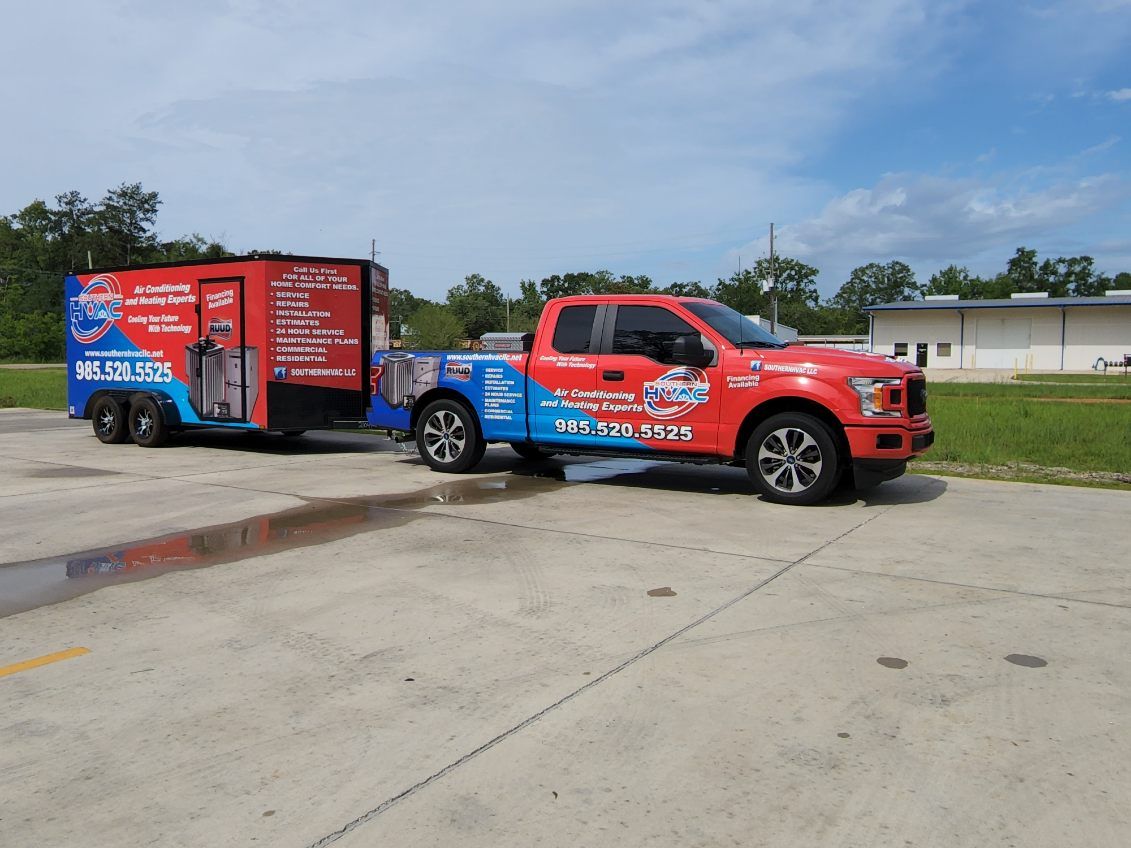
Southern HVAC LLC’s Field Lessons on Repair vs. Replace
Southern HVAC LLC has guided owners through tough choices when a beloved but tired system is still limping along. On a recent job, a 14‑year‑old 5‑ton split system in a two-story home had developed a slow refrigerant leak and a noisy blower. The owner had already paid for dye tests and top-offs. Rather than chase another AC repair, the team proposed a right-sized 4‑ton variable-speed heat pump, addressed a high-static return, and sealed key duct joints. The upstairs stabilized within a degree of the setpoint and indoor humidity dropped from the high 60s to the low 50s on muggy days. The electric bill fell by roughly 22 percent over the next summer compared to the previous three-year average.
On the commercial side, a clinic faced recurring humidity complaints and microbial growth around supply diffusers. The rooftop unit was technically “fine,” but outside air was uncontrolled. The replacement included a new economizer, re-commissioned controls, and a modest re-balance. Complaints vanished. The lesson repeated across jobs: equipment health, duct integrity, and controls form a three-legged stool. Ignore one and the others suffer.
Preparing for a smooth HVAC replacement
Owners who get the best results do a few simple things before the crew arrives.
- Gather recent energy bills and any AC repair or heating repair invoices to show performance trends. Walk the building to note hot or cold spots, rattles, or smells, and share that map with the estimator. Clear access to the air handler, electrical panel, and condenser pad to cut wasted time. Decide early about filtration and IAQ needs so the return design and filter cabinet fit the plan. Confirm thermostat preferences so staging and humidity settings can be programmed on day one.
That prep keeps the discussion grounded in your lived experience of the space, not just the equipment’s brochure.
Final thoughts: replace myths with measurements
Air conditioning replacement is a technical project wrapped in day-to-day comfort. The myths persist because cooling systems are out of sight and, when they work, out of mind. Trust measurements over assumptions. Static pressure, load calculations, matched equipment ratings, and real utility data point to the right decision more reliably than rules of thumb passed down the block.

Choose an HVAC contractor who treats the system as a whole, including ducts, controls, and ventilation. Insist on airflow numbers, not just tonnage. Consider how heating installation or heating replacement intersects with your cooling plans, especially if a heat pump could simplify both. Keep up with AC maintenance and heating maintenance so small issues do not grow into expensive problems. With sound information and a thoughtful process, replacement stops feeling like a gamble and becomes the logical next step in caring for your building.
Southern HVAC LLC
44558 S Airport Rd Suite J, Hammond, LA 70401, United States
(985) 520-5525